
About
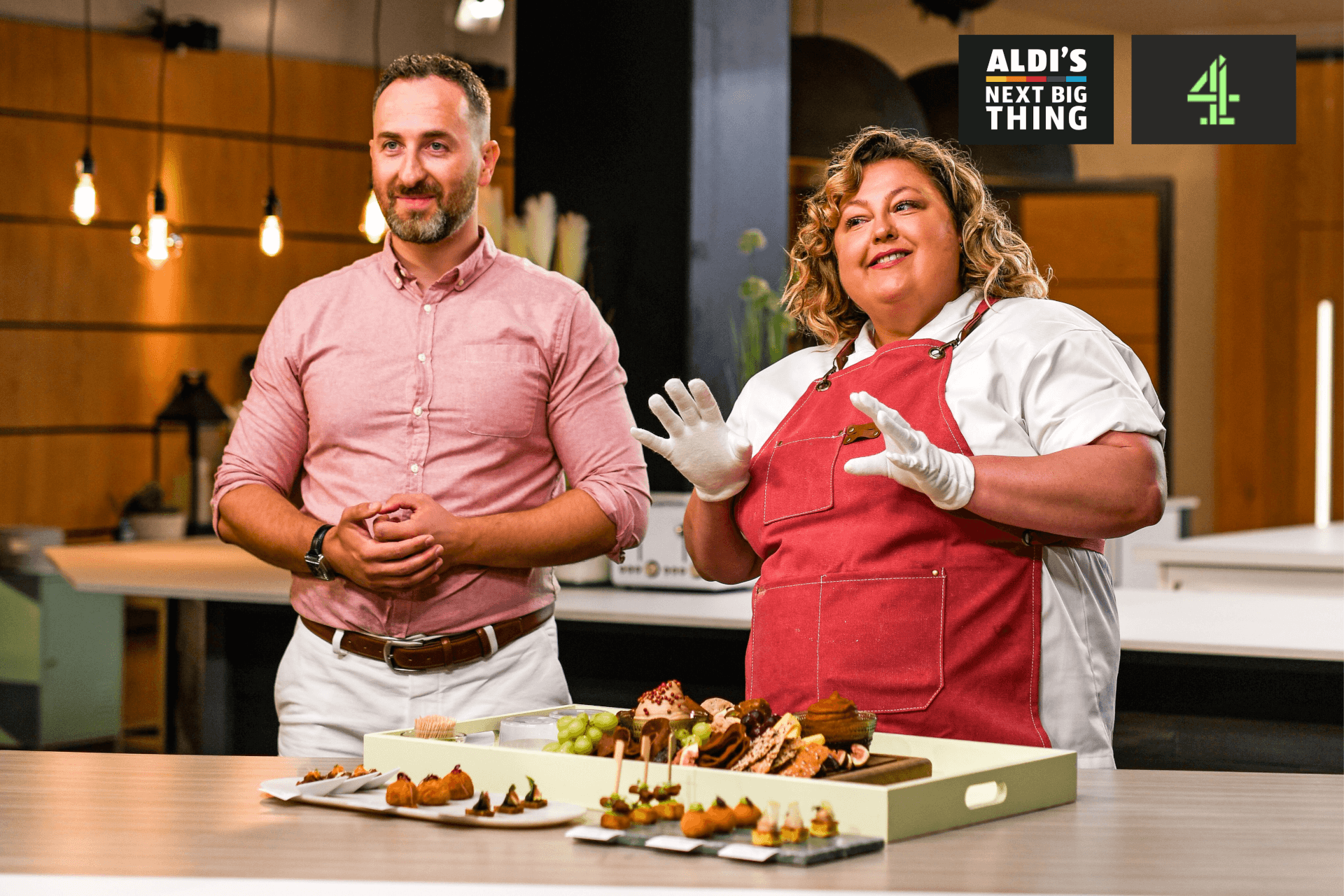
About Emma
Emma’s life has taken her from a small town on Ireland’s northwest coast to boxing rings, professional kitchens, boardrooms, courtrooms and operating theatres.
A former national boxing champion, national team captain, Michelin-trained chef and award-winning food innovation founder, Emma has spent her life breaking barriers in places where women were often underrepresented – from elite sport and professional kitchens to manufacturing, entrepreneurship, deep-tech innovation and public advocacy.
Her story is one of resilience, reinvention and purpose.
Growing Up on the Irish Border
Emma grew up in Bundoran, a seaside town on Ireland’s northwest coast, close to the border during the years of the Troubles. Her early life was shaped by community, regional identity, family business and the reality of growing up in a place where opportunity often had to be fought for.
Enterprise was part of Emma’s inheritance. In 1910, her great-grandmother founded what would become a thriving family business in Bundoran – at a time when women in her position could not vote or hold their own bank accounts. The business was later taken over by Emma’s grandmother, who became one of the most influential figures in her life.
As the eldest of five children, with four younger brothers, Emma learned responsibility early. At home and in the family business, she was often expected to lead, organise, protect and set the standard. Those expectations helped shape a strong sense of independence and resilience long before she understood how unusual that upbringing was.
From a very young age, Emma was being prepared for leadership. Her grandmother immersed her in the family business, teaching her not only the practical realities of running an enterprise but also the values that sustained it: responsibility, commercial instinct, accountability, hard work and service to the community.
Long before she entered a boxing ring, professional kitchen or boardroom, Emma was learning how to lead. Those early lessons would become the foundation for everything that followed – from sport and entrepreneurship to innovation, advocacy and public life.
That upbringing instilled a belief that leadership is earned through action, that setbacks are part of growth, and that women belong wherever decisions are being made.
Fighting for a Place
Emma first made her name in boxing, becoming one of Ireland’s pioneering female boxing champions at a time when women in the sport were still fighting for recognition.
In her twenties, the elite male boxing community became her second family. She was wholly dedicated to the sport – training relentlessly, competing nationally, and spending thousands of unpaid hours coaching underprivileged boys in inner-city clubs while also helping widen opportunity for girls and women to enter boxing.
For a number of years, Emma was one of the only women in the sport in Ireland. This was before the era of Katie Taylor, who would later become her teammate on the national squad.
Alongside competing, Emma qualified as a boxing coach and judge, giving her time freely to the sport and judging at the National Boxing Stadium. Her work in boxing was never just about her own success; it was about access, discipline, community and creating pathways for others.
As a national boxing champion and national team captain, Emma learned what it meant to perform under pressure, challenge expectations and keep going when the odds were against her.
Boxing became more than a sport. It became a place of discipline, belonging and purpose – and the foundation for the way she would later move through business, illness, public scrutiny and reinvention.
The Ricky Hatton Years
Emma’s life later crossed into the world of elite professional boxing through her relationship with Ricky Hatton, one of Britain’s most recognisable fighters.
It was a period that brought her close to fame, media attention and the intense scrutiny that surrounds public figures. It also introduced her to the darker side of the press – where private lives can become public property, and where narratives can be shaped by forces far beyond an individual’s control.
Years later, what began during that period would turn into a legal battle that would become one of the defining chapters of her life.
The High Court Battle
Refusing to accept the narrative that had been created around her, Emma initiated legal proceedings against Rupert Murdoch’s newspaper group, beginning a four-year High Court battle that ended in 2024 with Emma victorious.
For Emma, the case was never simply about headlines. It was about truth, reputation and the right to challenge a narrative created by others. The experience tested her resilience, determination and belief in justice in ways few people ever experience.
Winning the case marked a turning point – allowing her to reclaim her voice and move forward on her own terms.
Food, Business & Innovation
After boxing, Emma channelled the same discipline, competitiveness and resilience into food.
In Dublin, she built, owned and worked as head chef of her own multi-award-winning restaurant, earning a reputation for creativity, leadership and excellence in the kitchen.
She then went on to work with some of the world’s most celebrated chefs, including Heston Blumenthal and Hélène Darroze. She later expanded her culinary career as head chef for Riverford Organic, while also catering for Queen Elizabeth II and the Prime Minister.
Drawing on her culinary expertise and entrepreneurial mindset, Emma went on to found an award-winning food innovation company – creating an entirely new category of vegan meats. Her work earned national recognition, including UK Food Start-Up of the Year and Equity-Backed Entrepreneur of the Year, establishing her as one of the UK’s most exciting emerging food entrepreneurs.
Today, her work sits at the intersection of food technology and commercial innovation. She serves as COO of a biotechnology venture and co-leads two Innovate UK-funded food-tech projects at Imperial College London alongside a professor, helping bridge the gap between scientific research and real-world commercial impact.
As a commercial industry partner with the Bezos Centre for Innovation, Emma mentors scientists, researchers and founders working across biotechnology, AI, bioengineering and sustainable food systems, helping shape the next generation of food and health innovation.
Public Voice & Leadership
Alongside her work in innovation, Emma is a regular keynote speaker for the British Government’s national Business & IP Centre network, where she shares practical insight with aspiring entrepreneurs, underrepresented communities and people rebuilding their lives through enterprise.
She also contributes to Parliament’s Women & Equalities Select Committee on issues including enterprise, social mobility, regional employment and the role of food manufacturing in creating meaningful opportunity across the UK.
In 2025, Emma was selected as one of 50 women worldwide for the invite-only UBS Global Female Founder Programme, joining a global network of high-growth female entrepreneurs, investors and industry leaders. She uses that platform to expand her work across food innovation, women-led enterprise and founder support.
She serves as a judge for both the UK StartUp Awards and the Great British Entrepreneur Awards, helping recognise and support the next generation of ambitious UK businesses.
She is also an Innovate UK judge for NAPIC, helping assess which innovation projects in the alternative protein sector receive government funding.
Cushing’s Disease
Emma’s story has also been shaped by survival.
After years of unexplained symptoms and medical uncertainty, she was diagnosed with Cushing’s disease caused by a pituitary brain tumour – one of the most dangerous endocrine diseases.
Between 2024 and 2026, she underwent three brain operations as part of a life-saving treatment journey.
The experience changed her understanding of resilience, health and purpose. It forced her to rebuild physically, emotionally and professionally while navigating a condition that is frequently misunderstood, misdiagnosed and overlooked.
Today, Emma uses her platform to advocate for earlier diagnosis of rare diseases, greater awareness of Cushing’s disease and better recognition of patients whose symptoms are too often dismissed or misunderstood.
Looking Forward
Emma is currently developing her memoir with bestselling ghostwriter Andrew Crofts.
The book explores a life lived across extraordinary contrasts – from a childhood on the Irish border to national boxing titles, Michelin kitchens, entrepreneurship, public scrutiny, a landmark High Court victory, brain surgery and reinvention.
Today, she brings together her lived experience, commercial expertise and public voice to champion social mobility, women’s advancement, regional job creation, sustainable food innovation and rare disease awareness.
Her work is driven by a simple belief: adversity can become agency, and personal experience can be turned into public impact.